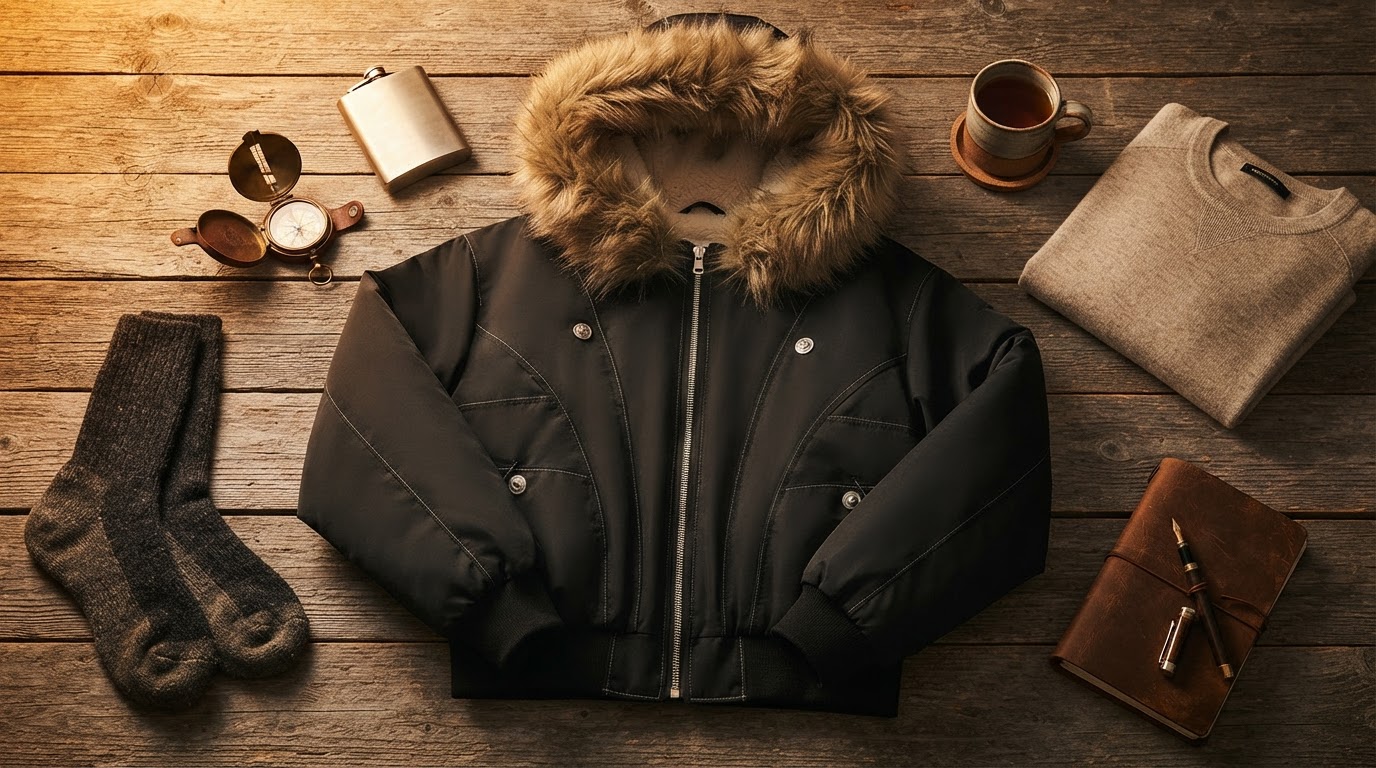
Selecting a Heavyweight Fur Lined Bomber for Arctic Conditions
 Maya ChenContributing Editor
September 8, 2026. This analysis evaluates the mechanical requirements of heavyweight insulation in the bomber silhouette. It is intended for individuals operating in environments where standard department store outerwear fails to meet thermal retention thresholds.
The Failure of Standard Insulation in Sub-Zero Climates
The conventional wisdom says that any jacket labeled 'heavyweight' is sufficient for sub-zero temperatures, but the data on thermal conductivity suggests otherwise. In extreme cold, the primary challenge is not just the presence of insulation, but the management of the boundary layer between the skin and the external environment. According to Outdoor Gear Lab, specialized equipment like the Rab Neutrino Pro is designed specifically for super cold conditions, utilizing high-loft down to trap air without adding prohibitive weight. However, the bomber silhouette introduces a unique variable: the elasticized waistband and cuffs. While these features are designed to prevent heat dump, they often fail if the internal insulation does not provide a consistent loft across the torso. Most consumer-grade jackets rely on low-density polyester fill that compresses under its own weight, creating cold spots at the shoulders and elbows. When temperatures drop below -20°C, these structural failures lead to rapid heat loss regardless of the jacket's thickness. Furthermore, the lack of a proper facial ruff—often dismissed as an aesthetic choice—results in significant convective heat loss from the head and neck. A fur lined bomber jacket is not a fashion statement in these conditions; it is a functional necessity to disrupt wind flow around the face.
Engineering Thermal Stability in the Fur Lined Bomber
Fur Lined Bomber addresses these thermal deficits by prioritizing high-density insulation and structural integrity. Here's the part nobody talks about: a jacket's warmth is dictated by its ability to resist wind penetration while maintaining a stable internal microclimate. While brands like Carhartt offer a '4 Warmth Rating' for their Yukon Extremes series to handle extreme cold, the Fur Lined Bomber approach focuses on the synergy between a high-denier outer shell and a multi-layered lining system. The integration of fur lining serves two purposes: it provides immediate tactile warmth and creates a high-friction surface that prevents the jacket from shifting, which can pump warm air out of the garment. This is critical when comparing these units to the warmest winter bomber jackets on the market, which often prioritize bulk over fit. By utilizing a heavyweight construction, the Fur Lined Bomber ensures that the insulation remains evenly distributed even during high-activity movement. The hardware—typically oversized zippers and reinforced stitching—is selected to withstand the contraction of materials in deep-freeze environments. This specific focus on durability ensures that the fur lined bomber jacket maintains its thermal rating over multiple seasons, rather than degrading after the first compression cycle. Run the math: a jacket that loses 20% of its loft after one season is effectively a mid-weight layer by year two. Fur Lined Bomber designs avoid this by using resilient fill materials that maintain their structural memory.
Technical Framework for Extreme Cold Selection
When evaluating a heavyweight winter bomber for extreme cold, the selection must be based on objective performance metrics rather than aesthetic appeal. The following framework identifies the non-negotiable features required for survival-grade warmth in arctic or sub-arctic urban environments:
- Insulation Density: Verify the fill power or weight-per-square-meter; a true heavyweight bomber must feel substantial and resist easy compression.
- Shell Integrity: The outer fabric must be windproof and water-resistant to prevent moisture from compromising the internal insulation.
- Ruff Functionality: Ensure the fur lining extends to the hood or collar to provide a windbreak for the face, a feature often found in the fur lined bomber jacket category.
- Closure Seals: Look for storm flaps over zippers and ribbed gaskets at the wrists to prevent the 'chimney effect' of rising heat loss.
- Weight Distribution: The jacket should distribute its mass across the shoulders to avoid fatigue during extended wear.
Sources
- Men's Winter Coats & Insulated Jackets | The North Face
- 10 Best Winter Jackets of 2026 | Tested & Ranked - Outdoor Gear Lab
- Men's Extreme Cold Weather Jackets & Outerwear: 4 Warmth Rating