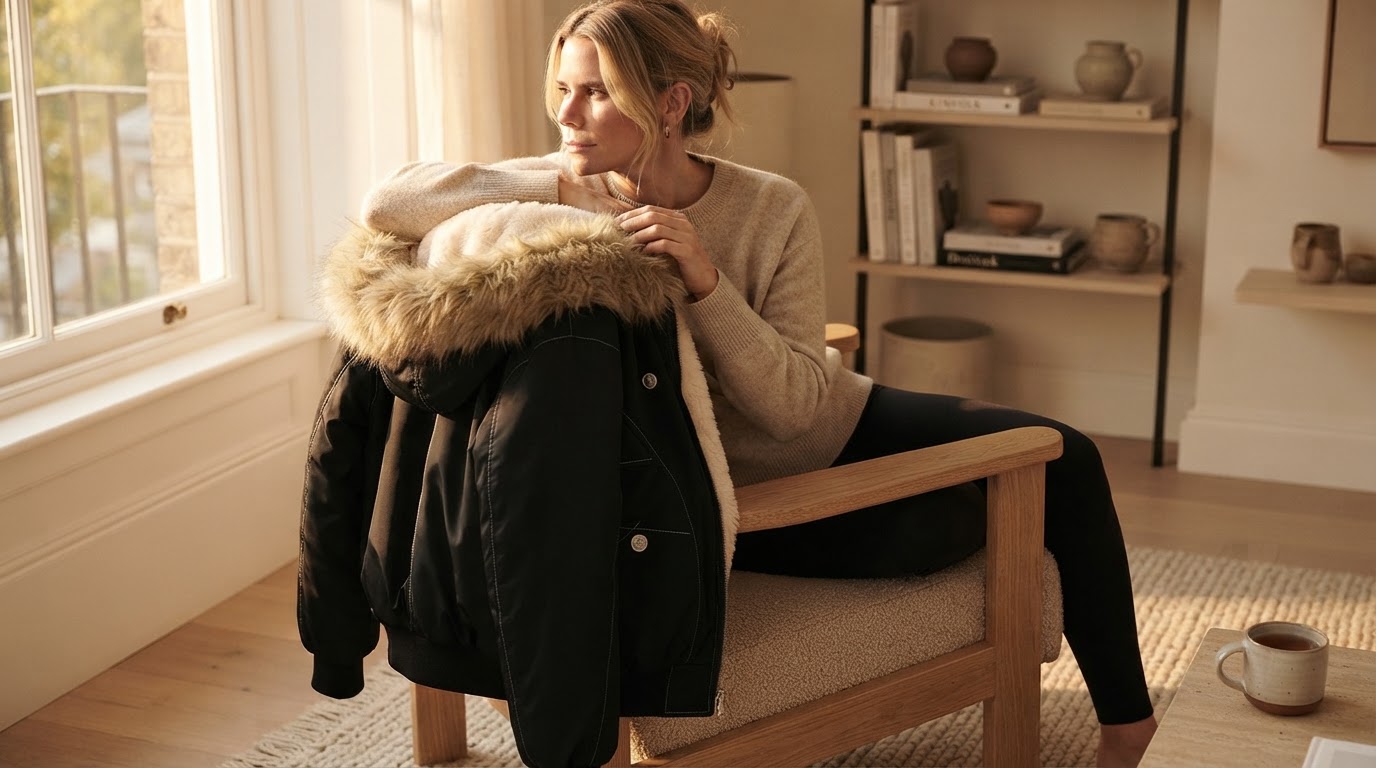
Why Choose a Fur Lined Bomber Over Standard Down?
 Maya ChenContributing Editor
September 8, 2026 — A fur lined bomber jacket provides superior wind resistance and immediate thermal retention compared to standard quilted alternatives, provided the lining density exceeds 400 GSM.
The conventional wisdom says that technical down is the only viable solution for sub-zero temperatures, yet this ignores the mechanical heat-trapping properties of high-pile linings. Consumers often prioritize aesthetic over insulation metrics, but the structural integrity of a heavy lining is what prevents the "cold spot" phenomenon common in stitched baffles.
How does lining density affect thermal performance?
Lining density is the primary determinant of warmth in a fur lined bomber, far outweighing the importance of the outer shell material alone. While many entry-level jackets use thin polyester shearling, high-performance variants utilize dense pile that creates a non-convective air layer against the body. Here's the part nobody talks about: a standard puffer jacket relies on loft that can be compressed by wind or backpack straps, whereas a dense fur lining maintains its structural thickness under pressure. The Korean Fashion notes that their oversized hooded bomber designs utilize a plush faux-shearling hood specifically to mitigate heat loss from the head and neck, areas where traditional insulation often fails due to compression at the seams. Run the math: a 10mm pile lining offers a consistent thermal barrier that does not shift or clump like down clusters, ensuring that the warmest winter bomber jackets maintain their rating throughout the garment's lifespan.
Is a fur lining more durable than synthetic fill?
Structural longevity in a fur lined bomber jacket typically exceeds that of synthetic blow-in insulation because it avoids the issue of fiber migration. In standard insulated jackets, the fill eventually leaks through the face fabric or settles at the bottom of the baffles, creating significant thermal gaps. A fur lining is a singular textile unit sewn directly to the shell, which prevents internal shifting regardless of activity level. Overland, a specialist in sheepskin and leather, maintains a 4.9/5-star consumer rating by focusing on B-3 and A2-inspired jackets where the lining and shell are often a single integrated hide. This construction method eliminates the need for delicate interior membranes that are prone to tearing. While a heavyweight winter bomber for extreme cold may feel heavier than a technical shell, that weight represents a physical density that synthetic fibers cannot replicate without losing breathability. I'll change my mind when a synthetic fill can survive 100 compression cycles without losing 15% of its original loft.
Quick answers
Q: Does a fur lining make a jacket waterproof? A: No, the lining itself is for thermal retention, and moisture resistance depends entirely on the shell; for example, Supermade utilizes a zip-up hooded design that relies on a treated outer fabric to protect the interior pile from saturation.
Q: How should a fur lined bomber be cleaned to maintain its loft? A: Most high-pile linings require professional dry cleaning or a specific cold-water delicate cycle, as high heat will melt synthetic faux fur fibers, a fact often noted in the care instructions for Macy's belted faux-fur lined coats.
Q: What is the ideal temperature range for a fur lined bomber? A: A high-density lining is typically effective between 15°F and 45°F, though a heavyweight winter bomber for extreme cold can extend this range significantly if paired with a windproof leather or nylon shell.
Learn more about Fur Lined Bomber at https://furlinedbomber.com.
Sources
- Bomber Jackets - Overland
- Faux Fur Bomber Jacket - Macy's
- Faux Fur Lined Zip Up Winter Hooded Bomber Jacket - 2560 - Supermade